What is actually happening during sleep paralysis?
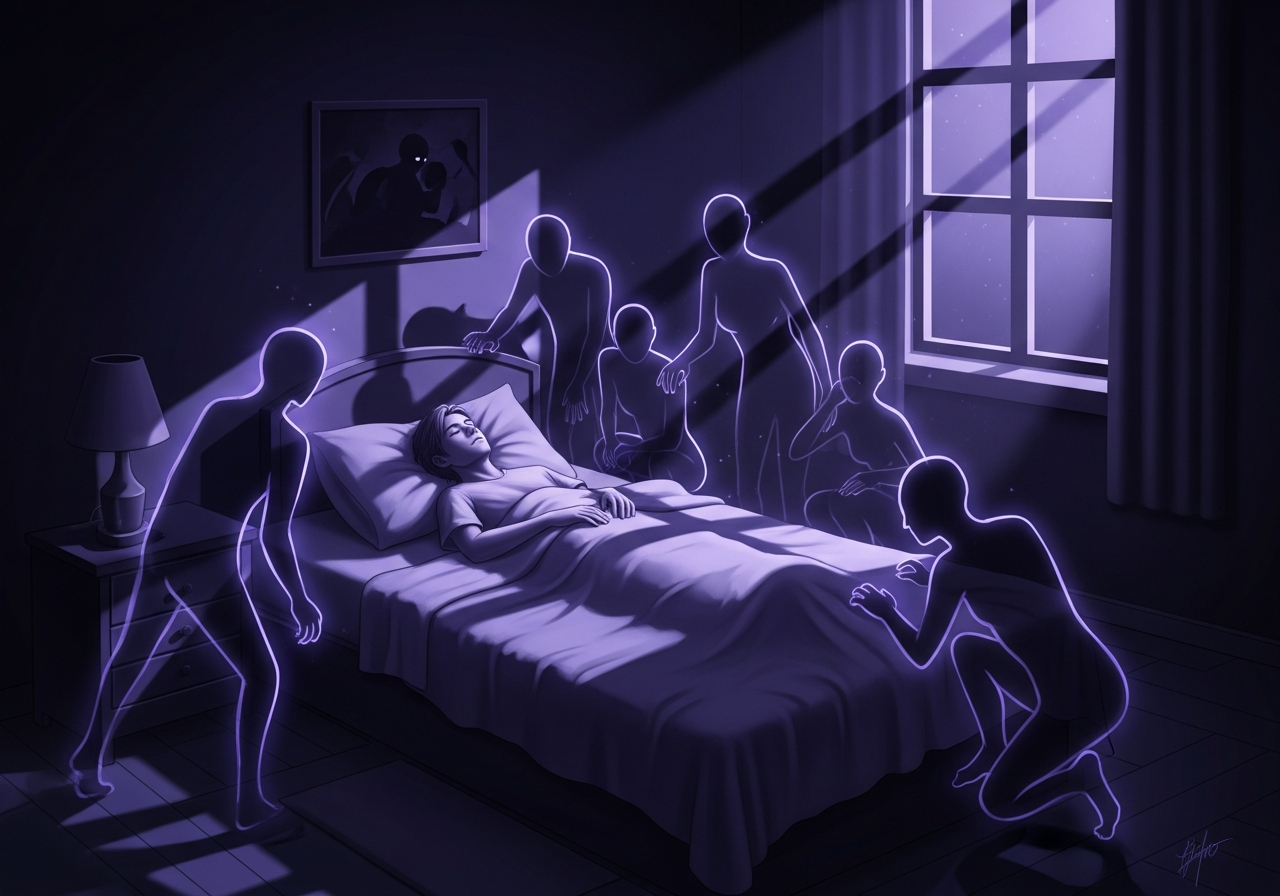
Imagine the scene: you wake up in the middle of the night, but you can't move your arms, your legs, or even open your mouth to call for help. You feel a heavy weight on your chest, and a dark shadow seems to be standing in the corner of the room. Although this experience is terrifying for many, it is a common and biologically explainable phenomenon known as sleep paralysis.
Sleep paralysis is a state where the body and mind are not perfectly in sync when transitioning from sleep to wakefulness, or vice versa. It is a window into the threshold between REM (rapid eye movement) sleep and being awake, which can last from a few seconds to several minutes.
The biology behind the fear
When we enter REM sleep, our brains switch off skeletal muscle movement. This state is called REM atonia. Its purpose is to protect us: without it, we might physically act out our dreams, which could lead to injury.
In sleep paralysis, consciousness returns, but the muscle paralysis remains active for a moment. Because you are still partially in a state of REM sleep, your brain may project dream imagery onto your real-world environment. This gives rise to typical hallucinations: a sense of a stranger in the room or hearing strange noises. Fear is a natural reaction to the loss of control over one's own body.
Why does sleep paralysis happen?
Nearly everyone experiences sleep paralysis at least once in their lifetime. However, certain factors can make it more likely:
- **Sleep deprivation:** Not getting enough sleep disrupts your sleep cycles.
- **Irregular sleep patterns:** Shift work or jet lag can trigger the state.
- **Sleeping position:** Statistically, sleep paralysis occurs most frequently when sleeping on your back.
- **Stress and anxiety:** Intense emotions affect the quality of your sleep.
How to survive sleep paralysis
If you find yourself in the middle of sleep paralysis, the most important thing to remember is that the state is harmless and will pass in a moment. Here are a few practical tips:
- **Don't fight it:** Struggling violently often increases panic and the intensity of hallucinations. Try to relax.
- **Focus on small movements:** Try to wiggle a toe, a finger, or move your eyes rapidly from side to side. This sends a signal to the brain that you are awake.
- **Regulate your breathing:** Even if it feels like there is a weight on your chest, your respiratory system is functioning automatically. Calm breathing helps alleviate the fear.
Sleep paralysis and the meaning of dreams
Sleep paralysis is often a gateway to deeper self-knowledge and an understanding of the dream world. Many people experience sleep paralysis particularly when they have intense, vivid dreams. This is where keeping a dream journal becomes invaluable.
By recording the feelings and visions experienced during sleep paralysis, you may notice recurring themes. Was the previous day particularly stressful? Did you sleep too little? AI-powered dream analysis, such as the Dreamer app, can help connect sleep paralysis to your lifestyle and emotional states. When you understand the source of your dreams and fears, they become much less daunting.
When to see a doctor
Most of the time, sleep paralysis is a harmless, albeit unpleasant, experience. However, if these episodes occur frequently, significantly disrupt your night's sleep, or cause severe daytime fatigue, it is a good idea to discuss the matter with a doctor. Sometimes it can be an underlying sign of narcolepsy or sleep apnea that requires treatment.
Summary
Sleep paralysis is a biological "glitch" where the brain wakes up before the muscles. it is a testament to the complexity of the human mind and the delicate balance between the different stages of sleep. By learning to recognize the condition and analyzing your dreams as part of your holistic well-being, you can transform these scary nightly experiences into an interesting journey into your own subconscious.